





Advanced natural ventilation ANV
Contents |
[edit] Introduction
Advanced natural ventilation (ANV), is often used to describe natural ventilation (NV) strategies for buildings that go beyond simple strategies for bringing fresh air into buildings via single sided or cross ventilation, through opening lights, windows or trickle ventilators. Advanced natural ventilation (ANV) describes strategies that might include specific architectural features to promote natural ventilation through the stack effect, buoyancy, or wind driven ventilation such as ventilation stacks, chimneys, shafts or cowls, atria spaces, light wells, wind catchers, cowls and scoops.
[edit] History
The origins the word ventilation lie in the Latin word ventilatio, or ventulus meaning a breeze, and from ventus meaning wind. Ventilatus, was the past participle of ventilare which was interpreted as to brandish, toss in the air, fan, agitate or set in motion.
In early history the Roman hypocaust system, was a heated underfloor ventilation system in which heated air was distributed through a building via pipes and tile vents.
In the early 1630's, King Charles I decreed ceilings in England should be 10 feet (3 meters) and windows taller than their width to allow for natural ventilation as it was assumed poor indoor conditions were causing the nation's health problems.
By 1660 ventilation was being described as the process of replacing foul air in an enclosed place with fresh, pure air. By the 1740's it was commonly referred to as the act of supplying a room with fresh air. A blowing wheel system was installed in the Houses of Parliament in London.
In slang, ventilation had an adopted the meaning of shooting someone ie by making holes in them to ventilate them.
In the 1840's the system in Parliament had been upgraded to a heating and cooling ventilation system. By the early 1900's simple air conditioning systems started appearing and would soon become very commonplace. Whilst from 2000 onwards, with the increasingly awareness of energy conservation, alternative systems with advanced natural ventilation, mixed mode and heat recovery have become more and more commonplace.
[edit] Complexity
Designing natural ventilation can become extremely complex because of the interaction between cross ventilation and the stack effect as well as complex building geometries and the distribution of openings. This can require analysis using specialist software systems such as computational fluid dynamics.
[edit] Automation
It can sometimes be beneficial to automate natural ventilation systems, or to provide training for occupants and monitor behaviour to ensure systems continue to be operated as intended a natural ventilation is also influenced by occupant behaviour. As an example a person near to a window may choose to close it because of close proximity to draughts, which might impact the level of carbon dioxide in the whole room by reducing the ventilation, which can in turn impact performance of others in the workplace.
However from the another perspective over automation of ventilation systems can leave occupants feeling disempowered, and unable to locally influence the conditions around them (for example by opening or closing a window). This can have make them more likely to express dissatisfaction with the overall internal conditions and environment, in some cases even if the internal environment is in fact optimal when measured empirically.
In modern buildings, which tend to be designed to be completely sealed from the outside unless windows or other ventilators are open, problems, such as condensation, can occur during the winter when openings are closed. As a result, ‘trickle ventilation’, or 'background' ventilation tends to be provided to ensure there is always an adequate level of ventilation. Trickle ventilators can be self-balancing, with the size of the open area depending on the air pressure difference across it.
[edit] Combined systems
It is possible, although relatively complicated, to include heat recovery in natural ventilation systems so that during cooler conditions, heat recovered from extract air is used to pre-heat fresh air entering the building. These systems are normally referred to as mechanical ventilation heat recovery or MVHR, and are an integral part of design strategies such as Passivhaus, along with high levels of airtightness, insulation and high performing glazing. These elements combined can help to dramatically reduce the heat energy require in a space, and can also help reduce the surface temperature differential between for example glazed surfaces and solid surfaces which can help improve comfort near those surfaces such as for example a desk placed next to a window during colder winter months.
[edit] Related articles on Designing Buildings
- Airbrick.
- BREEAM Potential for natural ventilation.
- Changes to Building Regulations Part F.
- Chilled beam.
- Complex system.
- Condensation.
- Convection.
- Cross ventilation.
- Dew point.
- Heat gain.
- Humidity.
- Interstitial condensation.
- Mechanical, electrical and plumbing MEP.
- Mechanical ventilation.
- Mixed-mode ventilation.
- Night-time purging.
- Passive building design.
- Passive solar design.
- Single-sided ventilation.
- Solar chimney
- Stack effect
- Sustainability.
- Thermal mass
- Trombe walls.
- Types of ventilation.
- UV disinfection of building air to remove harmful bacteria and viruses.
- Ventilation.
- Windcatcher.
Featured articles
Check out some of the best features and news from Designing Buildings as well as key stories from around the web.
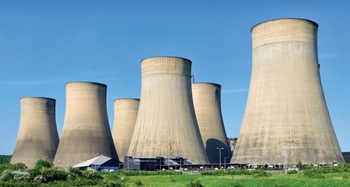
The heritage of nuclear and conventional power stations.
New measures to stop people being ripped off

Government to protect families from cowboy builders and aggressive bailiffs.
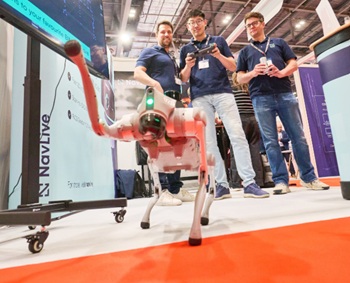
New Futurebuild showcase brings an innovation-first approach.
National Planning Policy Framework
Understanding the 2026 changes.
ECA's public affairs priorities

Member consultation opens to shape priorities for 2027 to 2030.

Dutyholder responsibilities from 1 July 2026.
Where performance meets practice
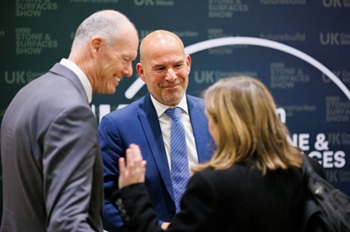
The Building Envelope Stage at UKCW Birmingham.
CIAT publishes briefing on planning reforms.
Leaders in Learning for Practice Network

Call for conservation leaders in learning to register interest in new network.
The importance of early engagement
Construction lessons from the Trillium HealthWorks Experience Centre.
Mayors are to be given planning call in powers
Mayors across England will be able to make the most important planning decisions.
The Master Builder: William Butterfield and his times. Book review.